Martinez Brings Academic, Teaching
Experience to Gould
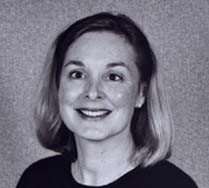 |
Janet Martinez |
Q: How did you first get interested in Alternative
Dispute Resolution?
Martinez: When I was practicing law, I was doing both
transactional work and general business matters. A colleague who managed
our corporate litigation became familiar with ADR practice generally,
and suggested trying mediation on a few commercial landlord disputes.
I don’t recall mediation being a particular success in those instances.
It was a new field, a new topic and it was hard to persuade clients that
it was a useful strategy to pursue – but it piqued my interest.
Certainly, I could have benefited from some executive education at that
point!
When my husband decided to study at Harvard’s Kennedy School of Government, I followed him to Cambridge. I was about to have another baby and didn’t plan to look for a legal position right away, so I decided to take a few courses, including one on negotiation and dispute settlement at the Program in Negotiation (PON) at Harvard Law School. Graduate study was a bit seductive, so the following year I started a masters’ program at the Kennedy School as well. I proceeded to finish out a specialization in negotiation, and took a number of courses in negotiation, mediation, and international dispute settlement from the business, public policy and law faculty.
Q: Even though you felt that alternative dispute
resolution didn’t work well for the clients you worked with, did
your studies persuade you that it had potential?
Martinez: It was interesting theoretically. The more
I read and discussed these concepts in class, the more I thought about
my negotiation practice and said, “There is some theory that is
attached to my practice.” International dispute settlement was taught
by two professors who were really good, and that was what turned my life
in a new direction. I took a course from Abram Chayes and Antonia Handler
Chayes in international dispute settlement and conflict systems. After
I finished my degree, I worked with them for three years as a researcher
and project manager. They were working on a book on international dispute
settlement, called The New Sovereignty. That’s really what exposed
me to the thinking about international dispute settlement, how it is dealt
with in different regimes and contexts and what kinds of lessons could
be drawn. My own dissertation is really an extension of that work.
My work with the Chayes' was only a part time job. At the same time, I started teaching at PON, working with the negotiation teaching group at Harvard Business School, and the advanced negotiation workshop at the Kennedy School. I wrote several exercises, including one we used that involves climate change and includes 23 parties. It gives students a real sense of how difficult large international negotiations are to manage. For the students chosen to serve in the secretariat, they quickly realize how hard it is to maintain your neutrality, manage an institution and help the parties in small groups and large groups practice negotiation. It is very hard to build consensus around what the world is going to support and comply with over the short and long term. Both researching and teaching in these complex negotiation areas is what cemented my interest in moving in that direction professionally.
Q: What other professional experiences helped you
develop your skills in ADR?
Martinez: I worked with the Consensus Building Institute
in Cambridge with Larry Susskind and Abe Chayes. In the 1992, we were
invited to facilitate a debate between proponents of free trade and advocates
of environmental protection. We suggested that having a debate, per se,
might not be so productive in coming to some agreement about how the issues
could be dealt with, so a different format was suggested. That event was
well received, and we continued for two more years, facilitating a series
of policy dialogues that came to be known as the Talloires Policy Dialogues
on Trade and the Environment.
Senior officials from nongovernmental organizations, trade delegations in Geneva, the GATT (predecessor to the WTO) secretariat, and industry participated. The goal was to ensure that a representative group of views were at the table to discuss what the salient issues were, where interests converged and differed. Around that time, a senior trade official commented: “Now that the Berlin wall has come down, the new enemy is the environmentalist.” I believe from the other side, the environmental advocates were saying, “These are a bunch of faceless bureaucrats that don’t understand how the world is being endangered by their activities.” Between these groups, having the conversation at all was important. Just to create a safe space and provide the opportunity for building some personal relationships and a deeper understanding of each other’s perspectives had value.
Q: Why are you interested in teaching at Stanford?
Martinez: I really like teaching negotiation and mediation.
Teaching is satisfying because it really matters. Negotiation is a skill
that all of us can use with different applications. Students recognize
its significance – both personally and professionally as lawyers
— and are willing to develop their ability to do it well. Teaching
at the Gould Center, certainly with Maude Pervere’s directorship,
is a great opportunity. Here we have a team of faculty who can work together
in building a curriculum that really serves the students’ needs
and interests. The support among the faculty team and the resources and
the commitment of that group is really appealing. Certainly another positive
aspect of the job is dealing with the students at Stanford and the Law
School who have a keen interest in negotiation and possibly some future
interest in international aspects of negotiation as well.